



Wegovy Weight-Loss Pills Are Now Available in the U.S.—Here’s What That Means
The first GLP-1 pills for weight loss are hitting U.S. pharmacies. But how will they be prescribed?
Jakub Porzycki/NurPhoto via Getty Images
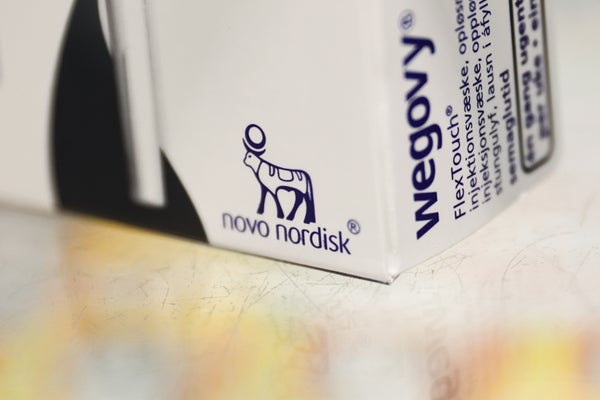
A pill version of the blockbuster weight-loss medication Wegovy is rolling out in the U.S., and people are already actively navigating prescriptions.
The pills are made by Novo Nordisk, the company behind the injectable version of Wegovy and the injectable drug Ozempic, both of which are forms of semaglutide that are taken weekly. The pill was approved by the U.S. Food and Drug Administration to treat obesity just weeks ago. If someone was prescribed it last Friday, they “could have it in their hands today,” a Novo Nordisk spokesperson told Scientific American.
Experts say that a pill version of the high-demand medication, which is part of a category of drugs that are broadly known as a glucagonlike peptide 1 (GLP-1) receptor agonists, could significantly reduce access barriers. A November 2025 poll by KFF Health News found that about half of people who were already on a GLP-1 medication, including those with insurance, had reported difficulty affording the drugs.
On supporting science journalism
If you’re enjoying this article, consider supporting our award-winning journalism by subscribing. By purchasing a subscription you are helping to ensure the future of impactful stories about the discoveries and ideas shaping our world today.
“Accessibility has been a major, major issue. And up until very recently, I’ve had patients facing huge co-pays,” says Sameer Khan, a hepatologist at John Hopkins University, who treats people with liver disease and obesity. “I think this is a pretty significant move in the right direction.”
The once-a-day pill version of Wegovy causes people to lose weight in the same manner as the weekly injections—by mimicking a gut hormone that makes people feel fuller faster and eat less. Unlike the injections, the pill is absorbed through the stomach before it reaches the bloodstream, which means the dose needs to be higher to reach comparable weight-loss results. Novo Nordisk’s phase 3 clinical trial found the highest 25-milligram dose of the pill resulted in a 16.6 percent weight loss on average at 64 weeks; an earlier trial found that the highest 2.4-milligram dose of Wegovy injections caused an average weight reduction of up to 17.4 percent at 68 weeks.
People who are prescribed the pills can expect their doses to increase over several months to allow the body to adjust and to assess any side effects that might come up. Under a Trump administration drug pricing deal that was agreed on last year, Novo Nordisk has listed the starting dose of 1.5 mg at an out-of-pocket cost of $149 a month. For a limited time, the company is offering the second 4 mg dose for $149 per month before it will be increased to $199 on April 15. Subsequent doses of 9 and 25 mg are both priced at $299 per month. But under some insurance plans, the pill could cost as low as $25 per month, according to Novo Nordisk’s spokesperson.
Pills are easier to take, but they are also easier and cheaper to produce, ship and store. Wegovy injections have to be kept in the refrigerator until use; if an injection pen is exposed to temperatures above 86 degrees Fahrenheit (30 degrees Celsius), they go in the trash, Khan says. Despite these perks, the cost of the pills isn’t much lower than Wegovy injections—doses of these cost $199 out-of-pocket for the first two months and then $349 per month.
“The hope was that once we have oral agents, they’re going to be less expensive than the injectable, because some of the justification for the higher cost of the injectable was the mode of delivery, the pens,” says Rozalina McCoy, an endocrinologist and internist at the University of Maryland. “Even though I’m not surprised, I am disappointed that the oral treatment, which doesn’t have that higher cost, is going to be a [similar] price for patients.”
McCoy is also concerned that the relative ease of accessing the pills may increase their off-label use among people who do not have obesity.
Novo Nordisk’s spokesperson maintained that the FDA has indicated the approved uses for the pills. “The body mass index requirements are not included in the Wegovy pill label, and the decision to start treatment is based on physician and consumer discussions and a joint agreement,” they added.
More options could soon be on the market, including Zepbound manufacturer Eli Lilly’s anticipated oral GLP-1 orforglipron, and will help further lower costs overall for the medications.
“I am hopeful that some of the competition in this market is going to be helpful with them potentially adjusting these prices further,” Khan says, “but I think only time will tell.”
It’s Time to Stand Up for Science
If you enjoyed this article, I’d like to ask for your support. Scientific American has served as an advocate for science and industry for 180 years, and right now may be the most critical moment in that two-century history.
I’ve been a Scientific American subscriber since I was 12 years old, and it helped shape the way I look at the world. SciAm always educates and delights me, and inspires a sense of awe for our vast, beautiful universe. I hope it does that for you, too.
If you subscribe to Scientific American, you help ensure that our coverage is centered on meaningful research and discovery; that we have the resources to report on the decisions that threaten labs across the U.S.; and that we support both budding and working scientists at a time when the value of science itself too often goes unrecognized.
In return, you get essential news, captivating podcasts, brilliant infographics, can’t-miss newsletters, must-watch videos, challenging games, and the science world’s best writing and reporting. You can even gift someone a subscription.
There has never been a more important time for us to stand up and show why science matters. I hope you’ll support us in that mission.
