

Close Menu
bkngpnarnaul
  • Home
  • Education
    • Biology
    • Chemistry
    • Math
    • Physics
    • Science
    • Teacher
  • E-Learning
    • Educational Technology
  • Health Education
    • Special Education
  • Higher Education
  • IELTS
  • Language Learning
  • Study Abroad

Subscribe to Updates

Please enable JavaScript in your browser to complete this form.
Loading
What's Hot

February Lesson Plans for Special Education

January 22, 2026

Designing the 2026 Classroom: Emerging Learning Trends in an AI-Powered Education System – Faculty Focus

January 22, 2026

A Brief Introduction to Buckminster Fuller and His Techno-Optimistic Ideas

January 22, 2026
Facebook X (Twitter) Instagram
Thursday, January 22
Facebook X (Twitter) Instagram Pinterest Vimeo
bkngpnarnaul
  • Home
  • Education
    • Biology
    • Chemistry
    • Math
    • Physics
    • Science
    • Teacher
  • E-Learning
    • Educational Technology
  • Health Education
    • Special Education
  • Higher Education
  • IELTS
  • Language Learning
  • Study Abroad
bkngpnarnaul
Home»Biology»The hard truth about how hard it is to publish in Development 
Biology

The hard truth about how hard it is to publish in Development 

adminBy adminJanuary 21, 2026No Comments3 Mins Read0 Views
Share Facebook Twitter Pinterest LinkedIn Tumblr Email WhatsApp Copy Link
Follow Us
Google News Flipboard Threads
The hard truth about how hard it is to publish in Development 
Share
Facebook Twitter LinkedIn Pinterest Email Copy Link


[Editorial from Development by James Briscoe, Swathi Arur, Anna Bigas, Dominique Bergmann, Benoit G. Bruneau, Cassandra G. Extavour, Paul François, Anna-Katerina Hadjantonakis, Haruhiko Koseki, Thomas Lecuit, Matthias Lutolf, Irene Miguel-Aliaga, Samantha A. Morris, Kenneth D. Poss, Elizabeth J. Robertson, Peter Rugg-Gunn, Debra L. Silver, James M. A. Turner, James M. Wells, Steve Wilson.]
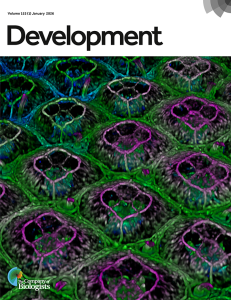
Cover of Issue 1 Volume 153 of Development

Every researcher knows the anticipation and trepidation that come with submitting a paper to a journal. Years of effort have been distilled into a few thousand words and a handful of figures containing the metaphorical (and often literal) sweat from long hours and hard toil in the lab. What will the reviewers say? How will the editor deal with it? At Development, we understand the anxiety and the investment that goes with a paper submission. Our mission is to provide the kind of expert, constructive review that not only evaluates your work but helps it achieve its full potential for lasting scientific impact. But we know that the comments provided by reviewers don’t always live up to this expectation. We’ve heard the concerns. Some of these frustrations reflect deeper, systemic issues across scientific publishing: the feeling that revision requests can expand beyond what is feasible, that editorial decisions are not always transparent, and that standards can seem uneven across subfields such as developmental and stem cell biology. These are not challenges unique to Development, but we acknowledge them and continue to refine our editorial practices to address them wherever possible.

We’ve been told that Development is ‘too hard to publish in’, that reviews are unnecessarily harsh, that revisions are excessive and time-consuming. These criticisms matter to us. Even though sometimes it might be more perception than reality, we won’t pretend that there isn’t some truth in these criticisms. As active research scientists ourselves, we Editors face similar frustrations with our own papers. We want to be transparent about Development’s reviewing process and explain how we endeavour to get the balance right so that it serves both authors and the scientific community.

First, the numbers behind the perception. The bottom line is that, for the past 10 years, 35-45% of papers submitted to Development ultimately get published. Let us break this down. Roughly 65% of the manuscripts submitted to Development are sent out for peer review. We only editorially reject papers when the topic of the article is beyond our scope and expertise, or it is clear to us that the study would not be supported by our peer reviewers. A rapid rejection allows authors to quickly redirect their manuscript to more appropriate venues and, where relevant, we facilitate direct transfers to our sister journal, Biology Open. Of the papers we send for peer review, well over 50% receive positive reviews from reviewers and we ask the authors to revise and resubmit these…

Thumbs up (No Ratings Yet)
Loading…


Source link

Development editorial Editors hard publish publishing Truth
Share. Facebook Twitter Pinterest LinkedIn Tumblr Email WhatsApp Copy Link
thanhphuchoang09
admin
  • Website

Related Posts

Biology

Detect Complexes, Aggregates, and Heterogeneity

January 22, 2026
Biology

Age-Related Loss of Proteosomal Function Triggers Chronic Inflammation via cGAS-STING – Fight Aging!

January 18, 2026
Biology

How to Detect Low-affinity Protein Binding Without Surface Plasmon Resonance

January 17, 2026
Biology

The health impacts of microplastics are studied using a Xenopus amphibian model.

January 13, 2026
Biology

Why Don’t Elephants Get Cancer? – Peto’s Paradox

January 12, 2026
Biology

Dementia Risk Varies Between Strong versus Weak Circadian Clock Regulation – Fight Aging!

January 10, 2026
Add A Comment
Leave A Reply Cancel Reply

You must be logged in to post a comment.

Top Posts

Announcing the All-New EdTechTeacher Summer Learning Pass!

May 31, 202555 Views

Improve your speech with immersive lessons!

May 28, 202553 Views

Weekly Student News Quiz: National Guard, Taylor Swift, Comets

October 13, 202550 Views

What Helps Nerve Pain in Legs After Back Surgery?

October 13, 202548 Views
Don't Miss

AIFS Abroad Student Spotlight: Molly’s Fall Semester in Prague

By adminJanuary 22, 20260

29 Eager to step into the footsteps of a college student who studied abroad in…

Top 10 Abroad Education Consultants in Hyderabad

January 19, 2026

AIFS Abroad Student Spotlight: Valeria’s Summer in Madrid, Spain 

January 18, 2026

Best Abroad Education Consultants for UK in Hyderabad

January 12, 2026
Stay In Touch
  • Facebook
  • Twitter
  • Pinterest
  • Instagram
  • YouTube
  • Vimeo

Subscribe to Updates

Please enable JavaScript in your browser to complete this form.
Loading
About Us
About Us

Welcome to Bkngpnarnaul. At Bkngpnarnaul, we are committed to shaping the future of technical education in Haryana. As a premier government institution, our mission is to empower students with the knowledge, skills, and practical experience needed to thrive in today’s competitive and ever-evolving technological landscape.

Our Picks

February Lesson Plans for Special Education

January 22, 2026

Designing the 2026 Classroom: Emerging Learning Trends in an AI-Powered Education System – Faculty Focus

January 22, 2026

Subscribe to Updates

Please enable JavaScript in your browser to complete this form.
Loading
Copyright© 2025 Bkngpnarnaul All Rights Reserved.
  • About Us
  • Contact Us
  • Disclaimer
  • Privacy Policy
  • Terms and Conditions

Type above and press Enter to search. Press Esc to cancel.