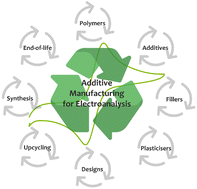



This review explores the advancements made toward sustainable practices in the field of additive manufacturing for electroanalysis. The adoption of Fused Filament Fabrication within the field of electroanalysis has allowed the development of unique sensing platforms, but reliance on commercially available conductive filament has limited the field. Through the development of bespoke filament researchers have progressed both the performance and sustainability of the produced filaments, moving towards using recycled polymers and bio-based additives. Key advancements have been made utilising base polymers with improved chemical and electrochemical stability, facilitating the transition away from single-use electrodes. Despite these advancements, critical challenges remain, especially considering the end-of-life processing of these items and the implementation of closed-loop recycling systems. Continued efforts are essential to realise a true circular economy electroanalytical device fabrication.