

Close Menu
bkngpnarnaul
  • Home
  • Education
    • Biology
    • Chemistry
    • Math
    • Physics
    • Science
    • Teacher
  • E-Learning
    • Educational Technology
  • Health Education
    • Special Education
  • Higher Education
  • IELTS
  • Language Learning
  • Study Abroad

Subscribe to Updates

Please enable JavaScript in your browser to complete this form.
Loading
What's Hot

5 Reasons To Subscribe to Tech & Learning

January 8, 2026

Best UK Study Abroad Consultancy in Ameerpet

January 8, 2026

Retrieval Practice Examples: 5 Tools Teachers Can Use

January 8, 2026
Facebook X (Twitter) Instagram
Thursday, January 8
Facebook X (Twitter) Instagram Pinterest Vimeo
bkngpnarnaul
  • Home
  • Education
    • Biology
    • Chemistry
    • Math
    • Physics
    • Science
    • Teacher
  • E-Learning
    • Educational Technology
  • Health Education
    • Special Education
  • Higher Education
  • IELTS
  • Language Learning
  • Study Abroad
bkngpnarnaul
Home»Physics»Parasitic worms rely on static electricity to find prey in midair
Physics

Parasitic worms rely on static electricity to find prey in midair

adminBy adminDecember 3, 2025No Comments4 Mins Read3 Views
Share Facebook Twitter Pinterest LinkedIn Tumblr Email WhatsApp Copy Link
Follow Us
Google News Flipboard Threads
Parasitic worms rely on static electricity to find prey in midair
Share
Facebook Twitter LinkedIn Pinterest Email Copy Link


Parasitic worms rely on static electricity to find prey in midair

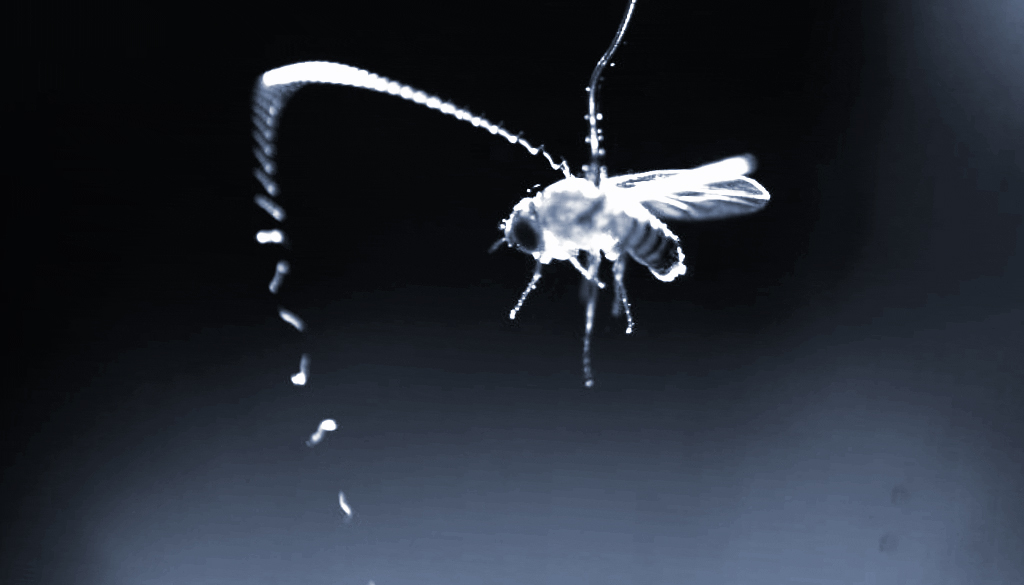
Some parasitic nematodes are known to propel themselves explosively into the air to land on their insect prey.

A new study by UC Berkeley and Emory University biologists and physicists suggests that they’re not just blindly leaping into the unknown, hoping against hope to hit their mark. They actually rely on an electrical attraction to home in on their host.

Victor Ortega-Jiménez, a UC Berkeley assistant professor of integrative biology, and his colleagues tested a hypothesis that the electrical attraction between tiny animals is important for finding and capturing food. In 2013, he discovered that spider webs take advantage of the charge of flying insects to electrostatically ensnare them as they pass by. And he recently wrote a commentary about the discovery that ticks are electrically attracted to furry animals thanks to the static charge they generate, similar to that produced by rubbing a balloon through your hair. From those observations, Ortega-Jiménez began to wonder if nematodes, which are as slender as strands of spider silk, might be pulled toward charged flying insects.

“We live in an electrical world, electricity is all around us, but the electrostatics of small organisms remains mostly an enigma,” Ortega-Jiménez said. “We are developing the tools to investigate many more valuable questions surrounding this mystery.”

When recorded at 10,000 frames per second and slowed down, video shows how a jumping nematode is attracted to a charged fruit fly, allowing it to stick a landing in midair. (Video credit: Victor Ortega-Jiménez/UC Berkeley)

Working with tethered fruit flies, he recorded dozens of leap attempts by the nematode Steinernema carpocapsae, a parasitic roundworm common in soil worldwide. He wired a battery to the tethered fly to give it an electrical charge that would attract the worms and captured the leaps with a high-speed camera shooting at 10,000 frames per second. The worms, less than a millimeter long, can jump up to 25 times their body length.

“I believe these nematodes are some of the smallest, best jumpers in the world,” Ortega-Jiménez said.

Justin Burton, a physicist at Emory, developed a mathematical model that postdoctoral fellow Ranjiangshang Ran used to analyze the data. The model showed that a few hundred volts — a static charge easily produced by an insect’s wings beating in air — generates an opposite charge in a jumping worm and significantly increases the odds of it connecting to a midair insect. A charge of just 100 volts resulted in a probability for hitting the target of less than 10%, while 800 volts boosted the probability of success to 80%. A slight wind actually improved chances of success.

“Our findings suggest that, without electrostatics, it would make no sense for this jumping predatory behavior to have evolved in these worms,” Ran said.

A fruit fly in an experimental setup is charged by a tiny wire glued to its back and connected to a power source. Here, tiny tracer particles reveal the attractive force of the charged fly. (Video credit: Victor Ortega-Jiménez/UC Berkeley)

If a worm fails to land, it risks being eaten or drying out while suspended in the air.

Ortega-Jiménez explained that when the worm senses a mechanical perturbation, which can be an insect overhead, it curls into a loop and launches itself in the air. If the worm hits its target, it enters the insect’s body through a natural opening and deposits bacteria that live amicably in the nematode. These bacteria are lethal to insects, however, killing them within 48 hours. After the host dies, the worm feeds on the multiplying bacteria and the insect tissue and lays eggs. Several generations may occur in the insect’s cadaver until the juvenile worms emerge into the environment to infect other insects with bacteria.

“Using physics, we learned something new and interesting about an adaptive strategy in an organism,” Ran said. “We’re helping to pioneer the emerging field of electrostatic ecology.”

The study was published Oct. 14 in the journal Proceedings of the National Academy of Sciences.

FOR MORE INFORMATION


Source link

electricity Find midair Parasitic prey rely static Worms
Share. Facebook Twitter Pinterest LinkedIn Tumblr Email WhatsApp Copy Link
thanhphuchoang09
admin
  • Website

Related Posts

Physics

Has quantum advantage been achieved?

January 8, 2026
Physics

AI Is Coming For Scientists’ Jobs. Seriously.

January 7, 2026
Physics

Band-aid like wearable sensor continuously monitors foetal movement – Physics World

January 6, 2026
Physics

“Rivers and Dunes”

January 5, 2026
Physics

The Situation at Columbia XXXV

January 4, 2026
Physics

Meet the Archives Fellow Enriching the Historical Record of Women in the Physical Sciences

January 3, 2026
Add A Comment
Leave A Reply Cancel Reply

You must be logged in to post a comment.

Top Posts

Announcing the All-New EdTechTeacher Summer Learning Pass!

May 31, 202555 Views

Improve your speech with immersive lessons!

May 28, 202550 Views

Hannah’s Spring Semester in Cannes

May 28, 202546 Views

Weekly Student News Quiz: National Guard, Taylor Swift, Comets

October 13, 202545 Views
Don't Miss

Best UK Study Abroad Consultancy in Ameerpet

By adminJanuary 8, 20260

Choosing the right consultancy can save you time, effort, and unnecessary stress. Global Six Sigma…

Meet 4 People Who Did an Internship in France with AIFS Abroad

January 7, 2026

Top USA Education Consultants in Hyderabad

January 4, 2026

Claire’s Semester Abroad in Dublin, Ireland

January 3, 2026
Stay In Touch
  • Facebook
  • Twitter
  • Pinterest
  • Instagram
  • YouTube
  • Vimeo

Subscribe to Updates

Please enable JavaScript in your browser to complete this form.
Loading
About Us
About Us

Welcome to Bkngpnarnaul. At Bkngpnarnaul, we are committed to shaping the future of technical education in Haryana. As a premier government institution, our mission is to empower students with the knowledge, skills, and practical experience needed to thrive in today’s competitive and ever-evolving technological landscape.

Our Picks

5 Reasons To Subscribe to Tech & Learning

January 8, 2026

Best UK Study Abroad Consultancy in Ameerpet

January 8, 2026

Subscribe to Updates

Please enable JavaScript in your browser to complete this form.
Loading
Copyright© 2025 Bkngpnarnaul All Rights Reserved.
  • About Us
  • Contact Us
  • Disclaimer
  • Privacy Policy
  • Terms and Conditions

Type above and press Enter to search. Press Esc to cancel.