

Close Menu
bkngpnarnaul
  • Home
  • Education
    • Biology
    • Chemistry
    • Math
    • Physics
    • Science
    • Teacher
  • E-Learning
    • Educational Technology
  • Health Education
    • Special Education
  • Higher Education
  • IELTS
  • Language Learning
  • Study Abroad

Subscribe to Updates

Please enable JavaScript in your browser to complete this form.
Loading
What's Hot

February Lesson Plans for Special Education

January 22, 2026

Designing the 2026 Classroom: Emerging Learning Trends in an AI-Powered Education System – Faculty Focus

January 22, 2026

A Brief Introduction to Buckminster Fuller and His Techno-Optimistic Ideas

January 22, 2026
Facebook X (Twitter) Instagram
Thursday, January 22
Facebook X (Twitter) Instagram Pinterest Vimeo
bkngpnarnaul
  • Home
  • Education
    • Biology
    • Chemistry
    • Math
    • Physics
    • Science
    • Teacher
  • E-Learning
    • Educational Technology
  • Health Education
    • Special Education
  • Higher Education
  • IELTS
  • Language Learning
  • Study Abroad
bkngpnarnaul
Home»Science»How do you activate a supermassive black hole? A galaxy merger should do the trick
Science

How do you activate a supermassive black hole? A galaxy merger should do the trick

adminBy adminDecember 11, 2025No Comments5 Mins Read2 Views
Share Facebook Twitter Pinterest LinkedIn Tumblr Email WhatsApp Copy Link
Follow Us
Google News Flipboard Threads
How do you activate a supermassive black hole? A galaxy merger should do the trick
Share
Facebook Twitter LinkedIn Pinterest Email Copy Link


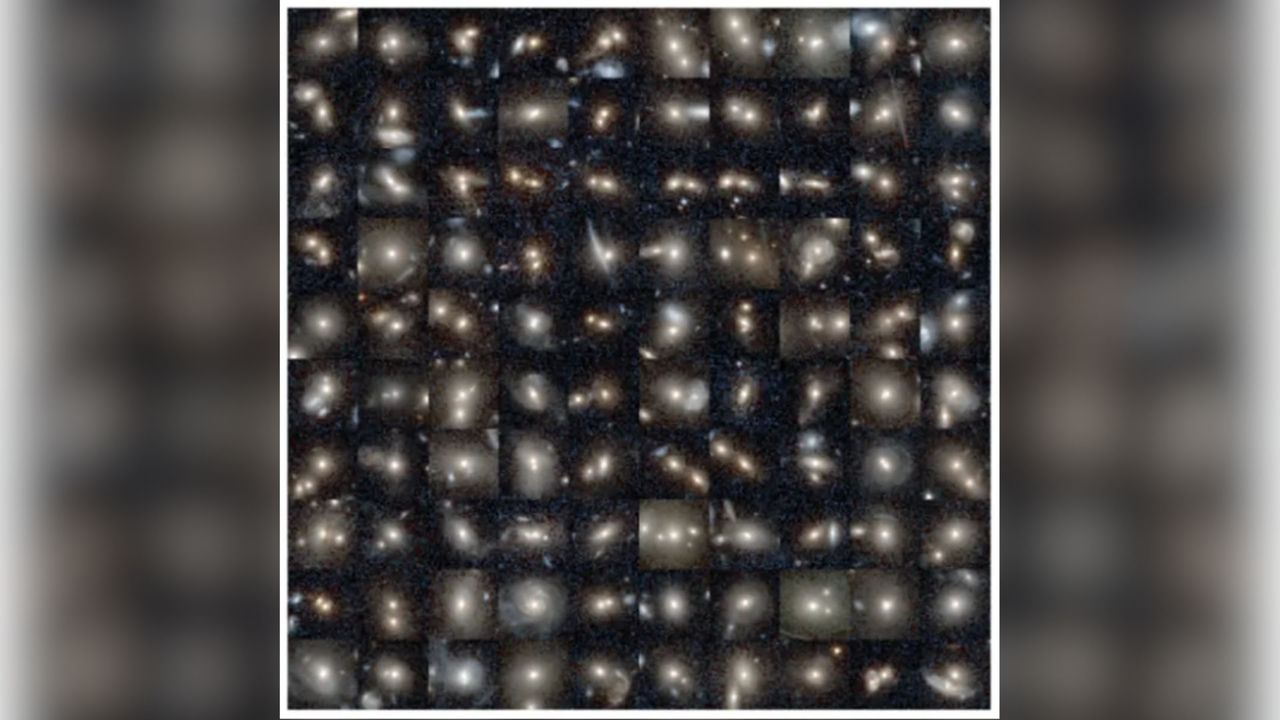
Scientists have confirmed that colossal collisions between galaxies trigger titanic eruptions in the centers of those galaxies, and the discovery is thanks to an artificial intelligence tool that was able to sort through images of a million galaxies to find those possessing a so-called active galactic nucleus, or AGN.

The results come courtesy of the Euclid space telescope, which is a European Space Agency mission that’s designed to study dark matter and dark energy by measuring and mapping billions of galaxies. Researchers took a “small” subset of a million of the galaxies Euclid is charting and used them to chronicle the causes of AGN.

An AGN describes a supermassive black hole at the center of a galaxy that suddenly begins consuming vast amounts of material. That material cannot all fit into the black hole‘s maw all at once, so it waits its turn in an accretion disk circling around the black hole. Think of it as a logjam of gas, and as more and more gas piles up, the density rises and the temperature increases, causing the disk to shine brilliantly. Furthermore, powerful magnetic fields can whip away some of the charged particles within the disk and spit them out in beams moving at almost the speed of light. When we see an AGN with beams coming towards us we call it a quasar or, for the most powerful that are pointed directly at us, a blazar.


You may like

It has long been strongly suspected that mergers play a crucial role in sparking AGN activity, because something needs to push all that gas into the nucleus of a galaxy, but suspecting and having confirmation are two different things. Validating this hasn’t been as easy as one might think, because the most powerful AGN are at a great distance from us (the closest quasar is 3C273, which is 2.3 billion light-years away) and clearly resolving galaxies at such distances so that we can see that they are definitely merging has been difficult. While the Hubble Space Telescope and James Webb Space Telescope can resolve them, they don’t cover a wide enough area of sky to be able to image enough to obtain a census.

Following its launch in 2023, Euclid has changed all that. With its 1.2-meter telescopic mirror, 600 megapixel camera and wide field of vision, in just one week it can provide higher quality images than most other telescopes while covering an area of sky similar to the total area that has been observed by the Hubble Space Telescope during its entire 35 years in service.

Astronomers in the Euclid Collaboration divided the million galaxies seen by Euclid into two categories: one where the galaxies appear to be merging, and one where no merger is taking place.

They then employed an artificial intelligence image decomposition tool developed by Berta Margalef-Bentabol and Lingyu Wang from SRON, the Netherlands Institute for Space Research, to identify AGN in these galaxies and even quantify their power output to determine which are the most energetic.

Breaking space news, the latest updates on rocket launches, skywatching events and more!

“This new approach can even reveal faint AGN that other identification methods will miss,” said Margalef-Bentabol in a statement.

The team found that there were between two and six times as many AGN in galaxies in the category of mergers than those not experiencing a merger.

In the case of mergers that have begun relatively recently and which have kicked up a lot of interstellar dust such that it shrouds the nucleus, making it only visible in infrared light, there are six times more AGN. In the case of mergers that are nearing their end stages and in which the dust has all settled, there are still twice as many AGN than in the non-merger galaxies.


You may like

“The difference between the two AGN types could mean that many AGN found in non-mergers are actually in merged galaxies that have completed the chaotic stages and appear as a single galaxy in a regular form,” said Antonio la Marca of the University of Groningen.

The observational evidence not only heavily supports the concept of mergers being a trigger of AGN activity, but also indicates that mergers are the primary cause, particularly for the most luminous AGN.

“We also conclude that mergers are very likely to be the only mechanism capable of feeding the most luminous AGN,” said la Marca. “At the very least they are the primary trigger.”

AGN represent the most rapid growth phase of supermassive black holes, and the outpouring of radiation from these gluttonous black holes can heat the molecular gas in a galaxy, preventing it from forming stars. AGN can therefore have a long-term impact on their host galaxy, and understanding that the host is likely to be merging is important to know when modeling the evolution of galaxies.

The findings are set to be published in the journal Astronomy & Astrophysics, and are available as two pre-prints, one detailing the analysis of merging galaxies and AGN, and the other describing the AI image decomposition tool.


Source link

activate Black Galaxy hole merger supermassive Trick
Share. Facebook Twitter Pinterest LinkedIn Tumblr Email WhatsApp Copy Link
thanhphuchoang09
admin
  • Website

Related Posts

Science

Japanese snow monkeys get more than just relief from hot springs

January 22, 2026
Science

Super Savings on This Unique Air Fryer That Cooks Food in Heatproof Glass

January 21, 2026
Science

This tool-using cow defies expectations for bovine braininess

January 20, 2026
Education

Push For Reparations For Black Californians Continues Despite Setbacks

January 20, 2026
Science

NASA’s Artemis II mission to the moon is inching toward the launch pad

January 19, 2026
Science

Playing Video Games Has an Unexpected Effect on Kids’ IQ, Study Says : ScienceAlert

January 18, 2026
Add A Comment
Leave A Reply Cancel Reply

You must be logged in to post a comment.

Top Posts

Announcing the All-New EdTechTeacher Summer Learning Pass!

May 31, 202555 Views

Improve your speech with immersive lessons!

May 28, 202553 Views

Weekly Student News Quiz: National Guard, Taylor Swift, Comets

October 13, 202550 Views

What Helps Nerve Pain in Legs After Back Surgery?

October 13, 202548 Views
Don't Miss

AIFS Abroad Student Spotlight: Molly’s Fall Semester in Prague

By adminJanuary 22, 20260

29 Eager to step into the footsteps of a college student who studied abroad in…

Top 10 Abroad Education Consultants in Hyderabad

January 19, 2026

AIFS Abroad Student Spotlight: Valeria’s Summer in Madrid, Spain 

January 18, 2026

Best Abroad Education Consultants for UK in Hyderabad

January 12, 2026
Stay In Touch
  • Facebook
  • Twitter
  • Pinterest
  • Instagram
  • YouTube
  • Vimeo

Subscribe to Updates

Please enable JavaScript in your browser to complete this form.
Loading
About Us
About Us

Welcome to Bkngpnarnaul. At Bkngpnarnaul, we are committed to shaping the future of technical education in Haryana. As a premier government institution, our mission is to empower students with the knowledge, skills, and practical experience needed to thrive in today’s competitive and ever-evolving technological landscape.

Our Picks

February Lesson Plans for Special Education

January 22, 2026

Designing the 2026 Classroom: Emerging Learning Trends in an AI-Powered Education System – Faculty Focus

January 22, 2026

Subscribe to Updates

Please enable JavaScript in your browser to complete this form.
Loading
Copyright© 2025 Bkngpnarnaul All Rights Reserved.
  • About Us
  • Contact Us
  • Disclaimer
  • Privacy Policy
  • Terms and Conditions

Type above and press Enter to search. Press Esc to cancel.