



If you’re anything like me, when cold weather sets in, you’re more likely to feel like cozying up with a hot cocoa and a good book than venturing outdoors for a run. But, being a strength and conditioning coach, I know getting regular fresh air and sunlight is crucial for my physical and mental health, and I’m guessing if you’re here, you feel the same.
When braving the elements this season, there are a few risks to be aware of. Cold weather puts extra strain on your heart and lungs, icy sidewalks create fall risks, and your body loses more fluids in the cold, which can fast-track dehydration. With the right preparation, however, you can still get out in the crisp air to exercise safely this winter and enjoy all the benefits it offers.
Benefits of exercising in cold weather
Physical activity supports heart health, blood sugar control, weight management, mood and sleep year-round, but the darker, colder days of winter make consistent exercise even more important. Cold weather workouts also offer unique benefits you can’t get indoors:
- Burn more calories: Your body works harder to stay warm and move, helping with healthy weight balance
- Activate brown fat: Cold triggers a special type of fat that burns energy as heat instead of storing it
- Boost immune function: Cold exposure increases infection-fighting cells that can strengthen your immune response over time
How to exercise safely during the winter
Exercising in cold weather creates a unique challenge for the body. Working muscles generate heat to keep you warm, but cold air at the same time stresses the heart, lungs and how your body controls temperature.
Major health organizations like the American College of Sports Medicine (ACSM) and the National Athletic Trainers’ Association (NATA) agree that cold weather exercise is usually beneficial, but it can become dangerous — even deadly — without proper precautions. But as long as you prepare well, you can exercise safely throughout the winter months.
Here are some tips for keeping your workout safe in the winter.
1. Dress in layers to prevent frostbite and hypothermia
Exposed skin can freeze (frostbite), especially on fingers, toes, nose, ears and cheeks. According to the National Weather Service, frostbite can occur in 30 minutes or less at wind chills of -18°F and below. Dangerously low core body temperature (hypothermia) can happen even above freezing if you get wet from sweat or precipitation.
Protect yourself by dressing in layers. Use a moisture-wicking base layer (polyester, polypropylene or merino wool), and avoid cotton, which absorbs sweat. Add an insulating mid-layer like fleece or wool, and top with a windproof, water-resistant outer shell. Wear a warm hat and mittens (warmer than gloves), as you lose up to 50% of body heat through your head and neck. Consider traction devices like micro-spikes for icy surfaces, and choose seamless, moisture-wicking sports bras to prevent chafing.
2. Warm up longer indoors
Cold makes muscles, tendons and ligaments tighter and thickens joint fluid, increasing strain and stiffness risk. Spend 10 to 15 minutes warming up indoors with dynamic movements like bodyweight squats, lunges, arm circles and marching in place. Start your outdoor session at an easy pace for another 5 to 10 minutes before picking up intensity.
3. Adjust your workouts to protect your heart and airways
Cold makes blood vessels tighten to preserve core warmth, forcing your heart to work harder and raising blood pressure. For most healthy people, this isn’t a problem, but even small temperature drops can increase the risk of heart-related events in people with cardiovascular disease.
Build intensity gradually to give your cardiovascular system time to adjust. Cold air also irritates airways, narrowing air passages and making breathing harder, especially for people with asthma or exercise-induced breathing problems. Breathe through your nose or cover your mouth with a scarf or gaiter to warm the air before it reaches your lungs. If ice makes running risky, try snowshoeing, Nordic walking or cross-country skiing. In extreme cold, break one long workout into shorter sessions.
Read: Why Asthma Gets Worse in Cold Weather >>
4. Check the weather and plan your route
Before heading out, check the National Weather Service wind chill chart because wind dramatically speeds up heat loss. Also check air quality and watch for ice and snow. Stick to well-lit, familiar routes and avoid busy roads after snowstorms. Join a local running or walking group for safety, share your route and expected return time with someone, and always carry your phone and ID. Wear reflective clothing and use a headlamp.
5. Hydrate and fuel appropriately
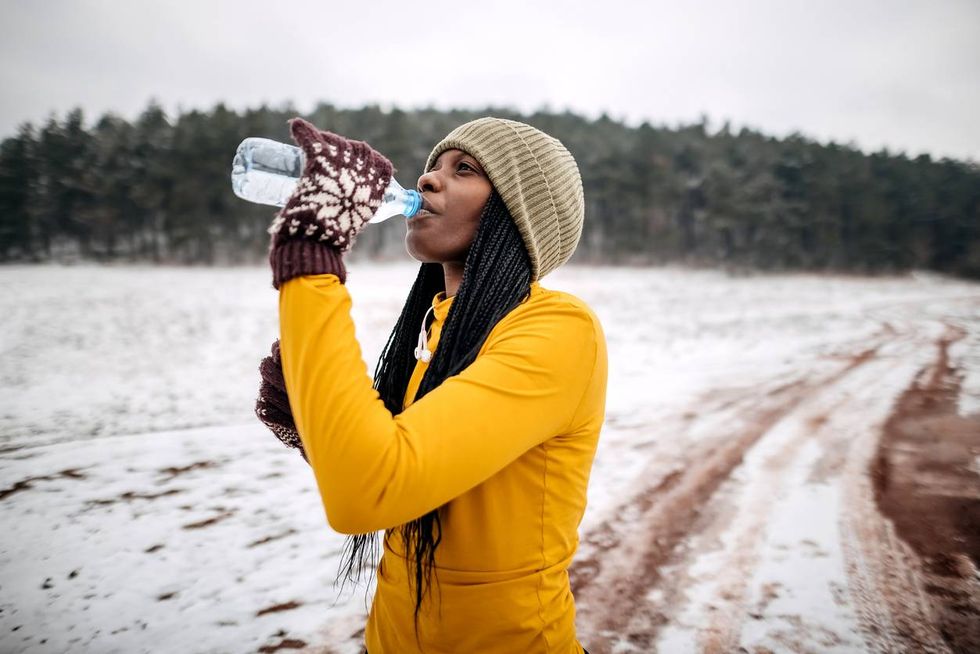
Your thirst drops by up to 40% in the cold, even though you’re losing fluids through breathing and sweating under layers. Hydrate before and after workouts, and during sessions longer than one hour. If ice-cold water doesn’t appeal, try warm tea or cider. Eat a small snack of lean protein and complex carbs one to two hours before exercise to maintain stable blood sugar.
For longer or intense workouts, eat simple carbs right before you workout and choose drinks with electrolytes and glucose/sugar to fuel your workout. Pay extra attention to carbohydrate intake during the follicular phase of your menstrual cycle (from the day you start bleeding until you ovulate, when hormones are low) since you may store less glycogen, which is necessary for energy. Eating a small snack before exercise helps maintain stable blood sugar, which is crucial for staying warm and keeping your mood steady.
When to get help or stay inside
Before you start or change a cold weather exercise routine, check in with your healthcare provider if:
- You have heart disease, high blood pressure or a history of cardiac events
- You have uncontrolled asthma or COPD
- You have diabetes or conditions that affect circulation or sensation
- You are pregnant or in the postpartum period
With the right preparation, many people in these groups can still exercise safely outdoors, but it’s important to have a plan that fits your health needs.
Some days, the weather itself makes outdoor workouts a bad idea for everyone. Stay inside when wind chill drops to extreme levels; when heavy ice, freezing rain, or deep snow make sidewalks too slippery, or when poor air quality or severe storms affect breathing and visibility. Listen to your body and local weather advisories.
The mental and physical benefits of staying active through winter are too valuable to miss. Bundle up, plan ahead and keep moving. Your body and mind will thank you.
From Your Site Articles
Related Articles Around the Web
