


An AI use agreement gives structure to how AI fits into classroom life. It sets shared expectations early, reduces confusion later, and helps students see AI as part of learning. When expectations stay implicit, misunderstandings grow. A clear agreement puts language around responsibility, transparency, and purpose before problems arise.
The strongest agreements come from conversation, not from a document handed down at the start of term. Bringing the class into the discussion helps students think through real scenarios. When is AI helpful? When does it cross a line? What feels fair? These conversations surface assumptions students already carry and give teachers insight into how learners actually approach AI tools.
Creating an agreement works best as a collaborative process. Draft ideas together, test them against sample assignments, and revise the wording so it reflects classroom reality. Students are more likely to follow guidelines they helped shape and understand. The agreement becomes a shared reference point.
An effective AI agreement also stays flexible. Tools change quickly and classroom needs shift across the term. Revisiting the agreement after a major project or when new tools appear keeps it relevant and signals that responsible AI use is an ongoing practice.
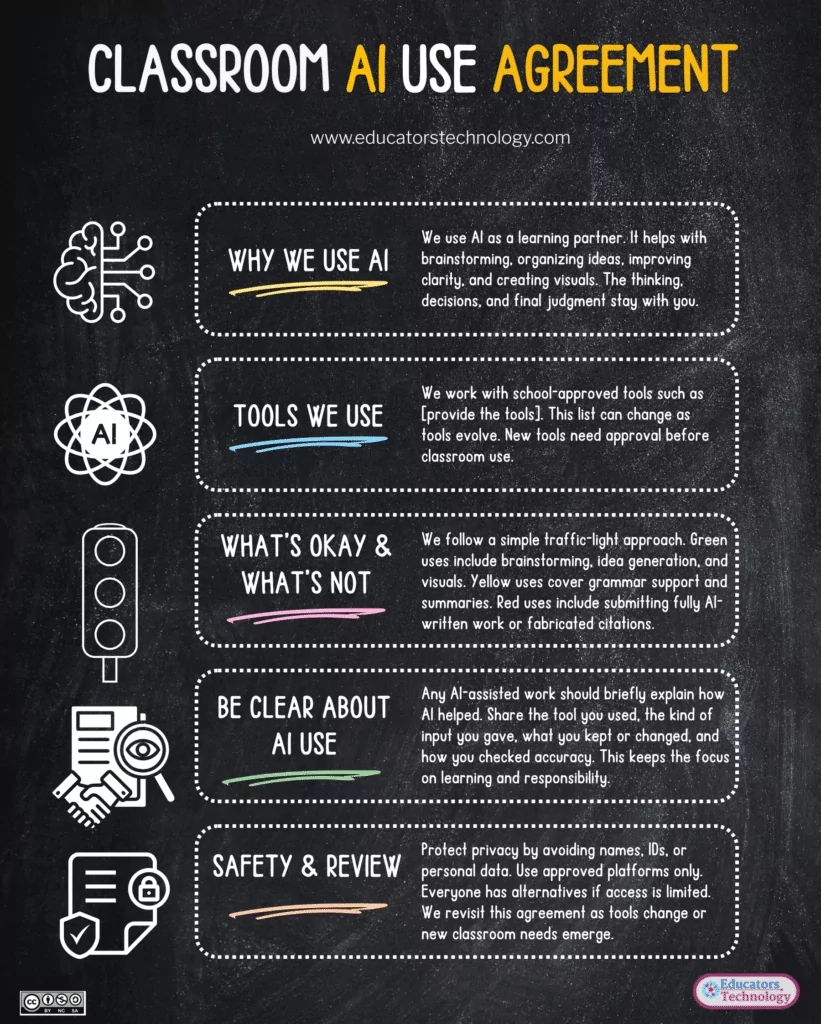
In this post I am sharing with you a poster I created using Canva for K-12 teachers. I included the following points:
- Why We Use AI
We use AI as a learning partner. It helps with brainstorming, organizing ideas, improving clarity, and creating visuals. The thinking, decisions, and final judgment stay with you. - Tools We Use
We work with school-approved tools such as [e.g., ChatGPT, Claude, Canva, and similar platforms]. This list can change as tools evolve. New tools need approval before classroom use. - What’s Okay and What’s Not
We follow a simple traffic-light approach. Green uses include brainstorming, idea generation, and visuals. Yellow uses cover grammar support and summaries. Red uses include submitting fully AI-written work or fabricated citations. - Be Clear About AI Use
Any AI-assisted work should briefly explain how AI helped. Share the tool you used, the kind of input you gave, what you kept or changed, and how you checked accuracy. This keeps the focus on learning and responsibility. - Safety, Access, and Review
Protect privacy by avoiding names, IDs, or personal data. Use approved platforms only. Everyone has alternatives if access is limited. We revisit this agreement as tools change or new classroom needs emerge.