



L&D is more than a function. It’s a live, reactive, and evolving organism that shifts as work, technology, and expectations shift around it. Keeping track (or even ahead) of those shifts is essential for L&D teams looking to plan, prioritize, and help employees perform at their best. But when they fall hard and fast, that’s easier said than done.
If 2025 felt like a redefining year for workplace learning, that’s because it was. We tracked shifts as they unfolded across 2025. And what we found was that everything took a hit — from workloads and skill demands to tech adoption and career expectations. These weren’t subtle changes; they were big swings that hit employees and L&D teams at pace.
How we know what we know: Evidence and experts
But first, let’s look at the two foundations that give our insights and follow-on tactics their weight: our own TalentLMS research and conversations with industry experts.
The data
Over the past three years, we’ve surveyed thousands of HR leaders and employees through our annual L&D Benchmark Report. We’ve tracked the same trend lines — learning behaviors, challenges, and priorities. And, by analyzing the data, surfaced the patterns that matter, from early warning signs to deep, enduring shifts. In the latest TalentLMS 2026 Annual L&D Benchmark Report, we’ve brought the data together to surface trends and year-over-year training benchmarks.
This long-view perspective is what gives the findings their weight. They’re not one-off insights or reactions to a noisy year. More importantly, they show the deeper realities shaping L&D, and the conditions every team will need to navigate in 2026.
The dialogue
Alongside the data, our Talent Talks podcast brought in voices from the field. These included learning designers, organizational psychologists, facilitators, and L&D leaders. Together they helped us make sense of the human realities behind the numbers. Their insights sharpened our understanding of the trends and shaped the strategic recommendations that follow here.

The 5 “hard truths” and 5 supporting strategies
The headline (and the good news) is that learning is no longer an afterthought. It has a seat at the table and a dedicated line in the budget. The hard truth? It’s now running head-first into the structural limits of how work (and training) actually happen.
Hard truth #1. L&D has more support but more pressure to perform
For years, L&D leaders have asked for the same things: greater buy-in, more resources, and sustainable budgets. Our data shows that, in many organizations, those needs are being met. But there’s a new reality: more support now comes with higher expectations.
The data:
- Leadership buy-in as a challenge dropped from 26% in 2022 to 13% in 2025
- Concerns about “inadequate training tools” fell from 28% to 20%
- 76% of HR managers are now satisfied with their L&D budget
- 75% say their L&D strategy is aligned with business KPIs
- And executives who see L&D as “a cost rather than an investment” fell from 54% to 41% in three years
The detail: L&D now has the attention it deserves. But with that attention comes pressure to prove that learning creates real business value. If it underperforms, backing, budget, or backbone are unlikely to be the cause. To identify the real blockers, training teams need to look beyond the obvious and explore the conditions, pressures, and behaviors that sit beneath the visible metrics.
The strategic shift: Position L&D as a true business partner, not a support function. Redefine “impact” by moving away from delivering content and toward building capability. And pivot on focus from activity to outcomes, courses to performance, and content consumption to capability growth.
Hard truth #2. Lack of time is the biggest threat to learning
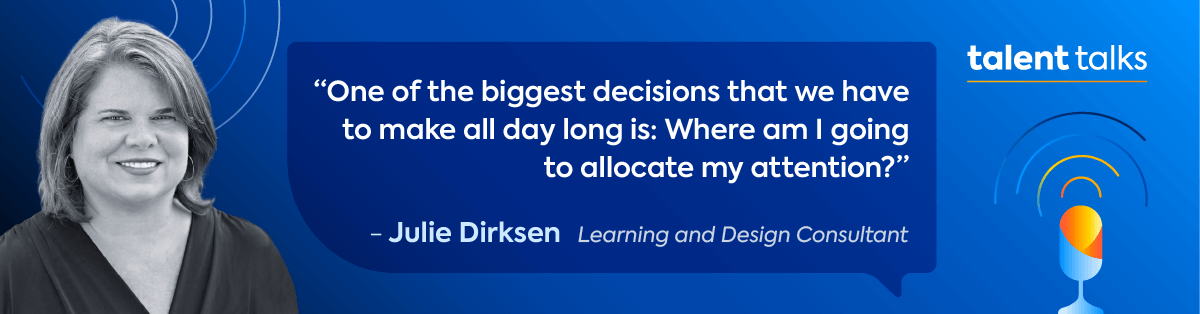
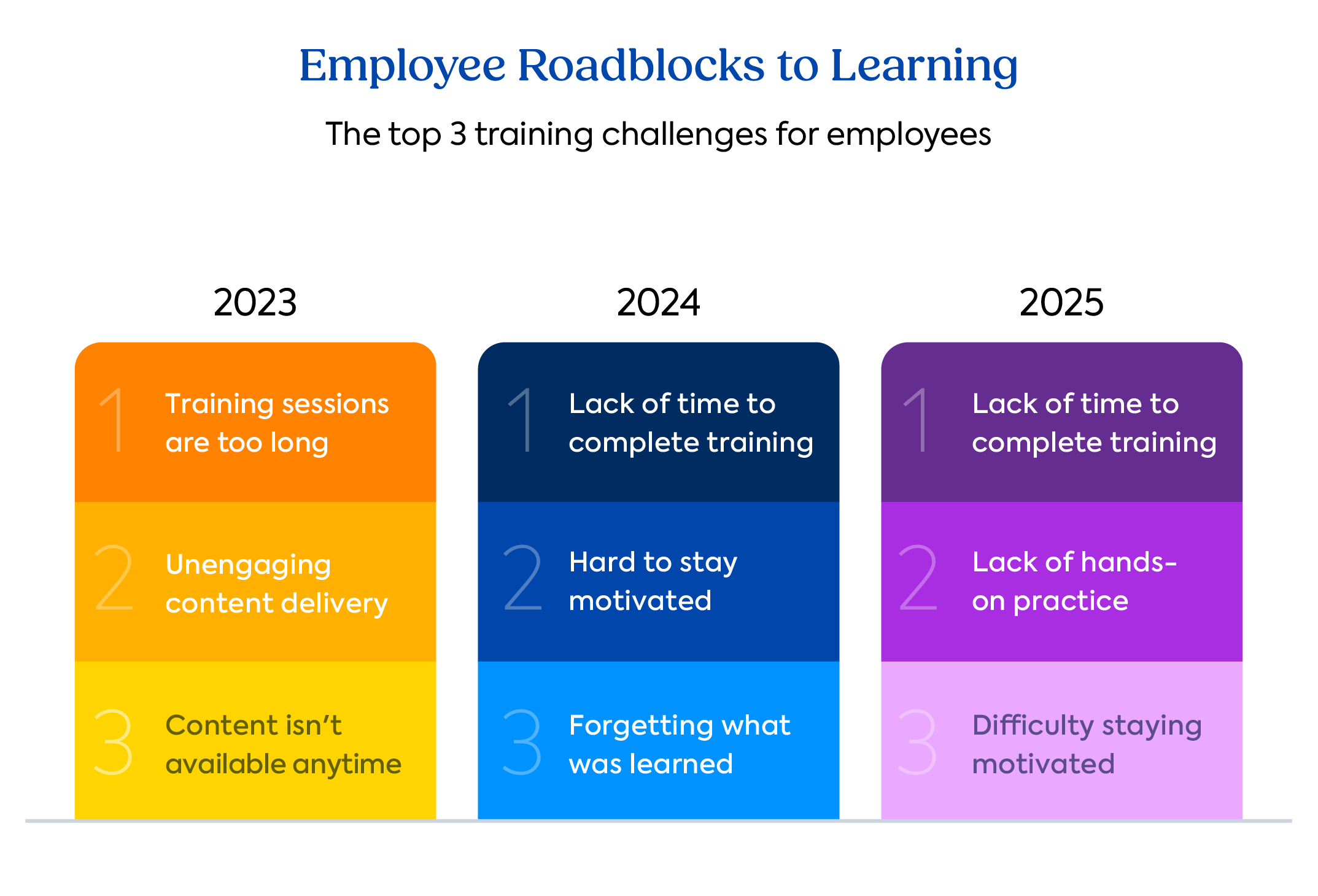
Resourcing may be improving, but the reality on the ground tells a different story. When we asked HR managers to explain why learning initiatives stall, one barrier consistently rises above the rest: no one has time. Workloads have grown, expectations have risen, and learning keeps getting squeezed out of the workday.
The data:
- 50% of HR managers and 54% of employees say workloads leave little room for training
- 46% of employees and 49% of HR managers say training is seen as “time away from real work”
- Performance expectations increased for 65% of employees
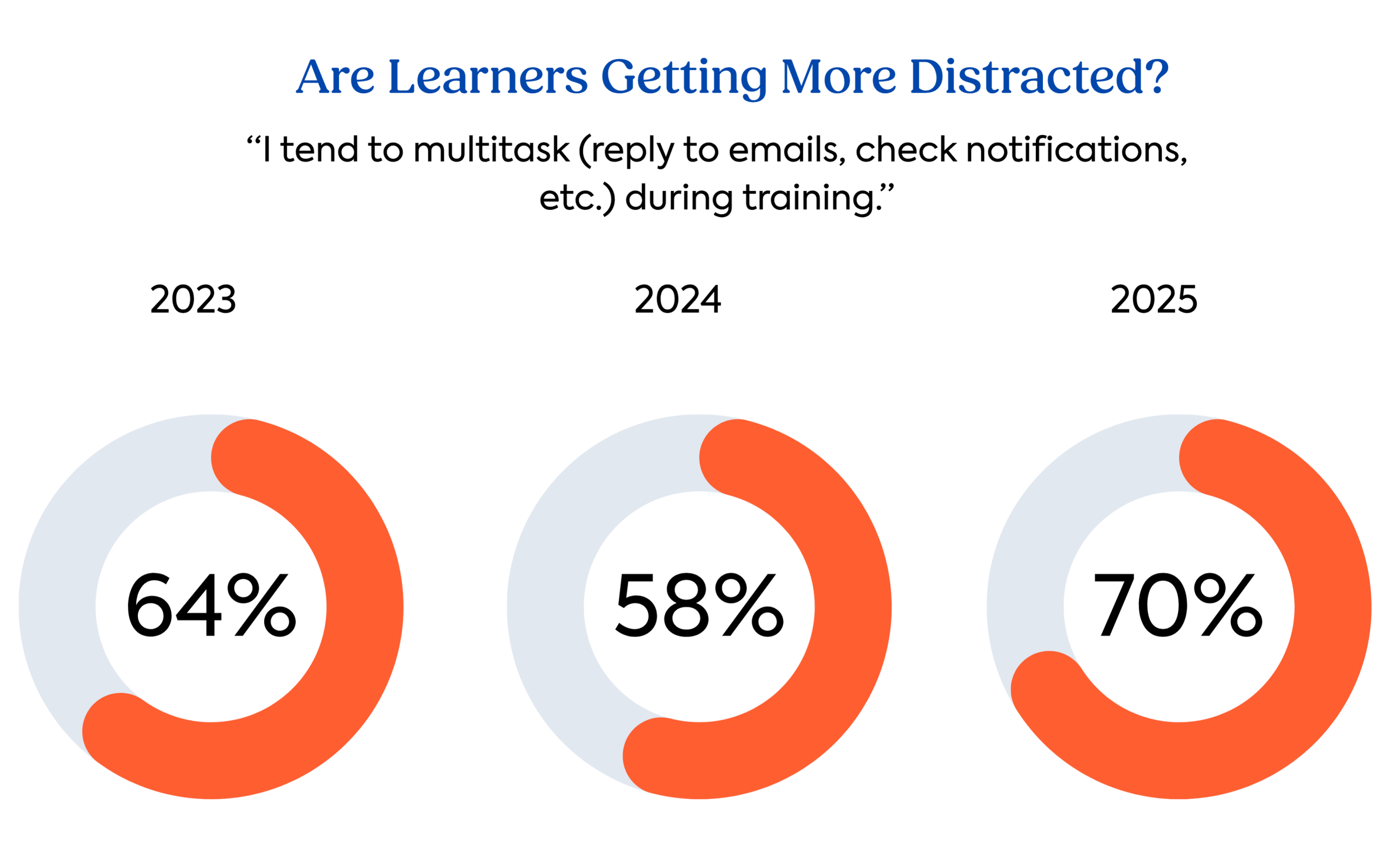
- Multitasking during training hit 70% in 2025
The detail: L&D isn’t competing with motivation. It’s competing with the calendar. And in that race, learning almost always loses.
The strategic shift: Make work the fast-lane learning engine. Adding more learning won’t address the time deficit. The only sustainable approach is to design learning into the work itself. That means embedding development into real projects, building stretch opportunities into everyday tasks, and focusing on micro-practice as well as micro-content. It also means protecting learning time at the team level, not relying on individuals to “find time.”
The rising risk of learning debt
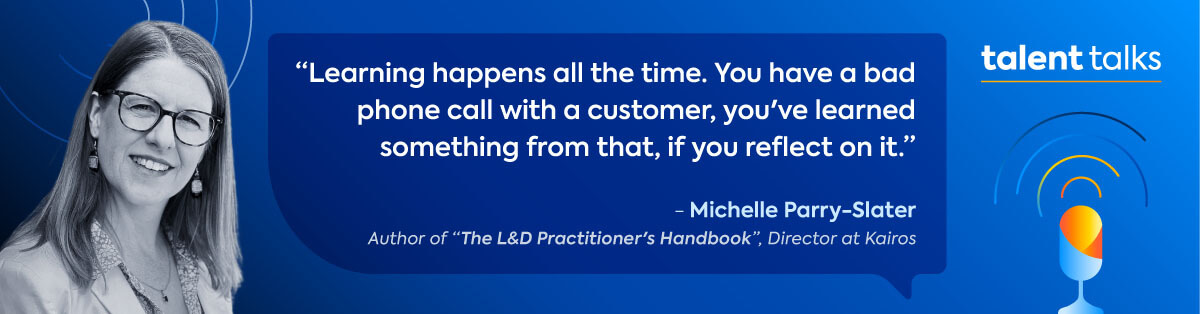
As time blocks learning on a day-to-day, practical level, another issue is growing under the surface. The skills employees need are evolving faster than the systems designed to build them. Work moves quickly and the workplace itself is changing even faster. This leaves little space for deeper skill formation. Employees have limited bandwidth for reflection, practice, or consolidation. And organizations often prioritize delivery speed over capability building.
The result is learning debt: the widening gap between what employees can do today and what the business will need them to do next. It isn’t caused by lack of learning. It’s caused by lack of depth. And if it goes unaddressed, it compounds over time, quietly weakening capability, confidence, and performance.
Learning debt shows up not as a single metric, but as a pattern of acclereating strain:
- employees missing out on deeper knowledge and new ways of thinking
- skill gaps shifting upward into higher-order capabilities
- content rolling out faster than people can meaningfully absorb
- capability lagging behind rising expectations
The strategic shift: Prioritize the capabilities that matter most. Pinpoint the critical skills for the next 12–24 months. Slowing down enough to go deeper. And designing learning around practice and application. Use AI to reduce low-value work and reinvest that time in coaching and reflection.
When organizations focus on the right skills, and build them intentionally, learning debt stops growing and capability starts compounding.
Read on to learn more!
Hard truth #3. We’re training people but not promoting them
Organizations are investing in learning, and employees are building new skills. But the movement that should follow isn’t happening. A widening gap has emerged between skill development and career development. While companies recognize the value of training, many still default to external hiring over internal mobility. As a result, learning is building capability, but it isn’t unlocking the career movement employees expect. And while employees can see that disconnect, many managers assume the path is clearer than it is.
The data:
- 95% of HR managers agree that better training improves retention
- 73% of employees say stronger L&D opportunities would make them stay longer. Yet 44% of HR managers say their company prioritizes external candidates over internal ones.
- Only 45% of employees say their training is clearly aligned with career growth (another 45% say it’s only “partly” aligned)
- Meanwhile, 83% of HR managers say employees do have clear advancement paths, revealing a perception gap
The detail: When the culture defaults to external hiring, training builds skills, but not mobility. Which, in turn, damages commitment. Until employees see a path forward, learning alone won’t keep them engaged or growing inside the organization.
The strategic shift: Build an internal mobility culture with managers as the frontline enablers. Mobility isn’t just a training problem, and it isn’t solely a management task. It reflects the company’s broader culture and hiring philosophy. Organizations need to normalize internal progression by creating transparent pathways, aligning learning with role readiness, and rewarding teams that grow talent from within.
Managers play a critical enabling role in this. In our discussions on onboarding and organizational change, managers emerged as the “make-or-break” figures. And this holds true here. They are pivotal in turning development plans into real opportunities, holding meaningful career conversations, and identifying internal candidates before defaulting to external ones.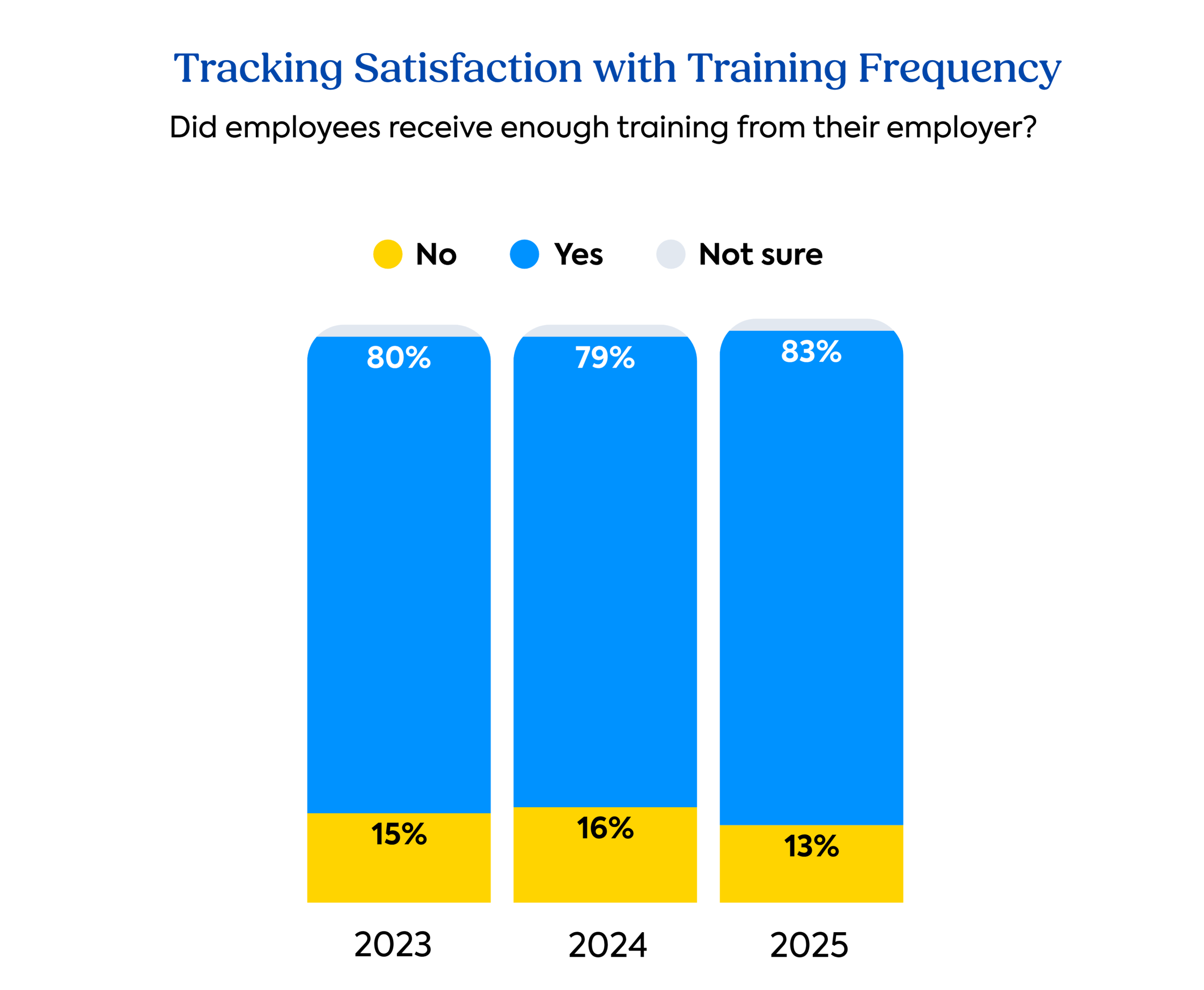
Hard truth #4. Training quality is up, but it’s not building real capability
On the surface, learning looks like it’s improving. Employees are more satisfied with their training experiences, and most say they receive enough of it. But underneath that positive feedback sits a different problem: the depth of the learning experience is slipping. People enjoy the training, they’re just not gaining the level of skill the business needs.
The data:
- Training satisfaction has risen to 84%
- 83% say they receive enough training during the year
- Yet multitasking during training has climbed to 70%
- Nearly one in three say their training is too theoretical
- And 86% report learning new skills mainly by “figuring it out on the job”
The detail: Good training isn’t the same as good learning. We’re closing the satisfaction gap faster than we’re closing the capability gap.
The strategic shift: Design for practice, not exposure. To build real capability, organizations need to prioritize doing over listening. That means thoughtful instructional design that reflects the psychology of behavior and social learning. It means using scenarios, simulations, and role plays that reflect real work. And reinforcing skills through post-training practice, application, and most importantly reflection.
5. AI is a learning hotspot, but also a growing source of tension
As organizations try to keep pace with shifting skill needs, AI has become both the next big accelerator and the next big stressor. Employees are curious and interested, but also uncertain and uneasy about how these tools will reshape their work. HR managers feel the strain too, viewing AI as a powerful (yet currently flawed) tool for driving learning. Add in the disconnect between how managers and employees perceive AI training, and it creates a complicated (potentially conflicting) relationship on all levels.
The data:
- 88% of HR managers expect Generative AI to reshape how employees access knowledge
- 83% of HR managers believe their company actively supports employees in learning how to use AI, but only 64% of employees agree. That’s a 19-point perception gap.
- 37% of employees say GenAI tools are weakening their ability to solve problems independently
- 47% of HR managers admit their AI training is designed partly to make jobs easier to automate
- 22% of HR managers cite unreliable AI-generated content as a challenge
- 24% of HR managers struggle with integrating new technologies into existing training
The detail: AI is a living contradiction for both employees and HR managers. It’s a tool that enables and disrupts at the same time. The result is a growing tension that’s shaping how confidently people adopt and use it.
The strategic shift: move from AI training to AI co-learning
Treat AI as a partner rather than a one-off training topic. Because when people learn with AI, not just about it, confidence and capability grow together. Design role-specific workflows, so people learn in context. And include scenarios where AI is wrong, so employees learn how to make decisions with it, not just how to use it. Instead of creating content, L&D becomes the architect of a responsible AI ecosystem, curating examples, setting standards, and helping teams build confidence through hands-on experimentation.
Conclusion: A new set of demands for L&D in 2026
2025 showed us that L&D now has influence, but it also faces tougher conditions than ever. The workday is more crowded. The skills landscape is shifting. AI is reshaping roles faster than people can adapt. And the gap between learning and career growth is widening.
The teams that thrive in 2026 will be the ones who:
- design learning around work, not outside it
- create depth, not just access
- make managers part of the learning engine
- align mobility pathways with capability building
- treat AI as a co-pilot, not a curriculum topic
- measure impact where it matters: performance, readiness, and retention
L&D can’t slow the pace of change. But it can design the systems, support, and experiences that help people rise to meet it.
