



Food webs and food chains are key science topics that pop up across the elementary and middle school grades every year. But what are they, and what is the difference between the two? A food chain is a direct line of who eats whom. Food webs are more complex, involving many food chains connected together. We’ve rounded up our favorite food chain and food web activities and resources to help you introduce key vocabulary in the classroom, while building background knowledge about different ecosystems. Kids will gain an understanding of how both are necessary for the survival of all life on our planet. Now that’s a big concept everyone needs to know more about!
1. Start with an anchor chart
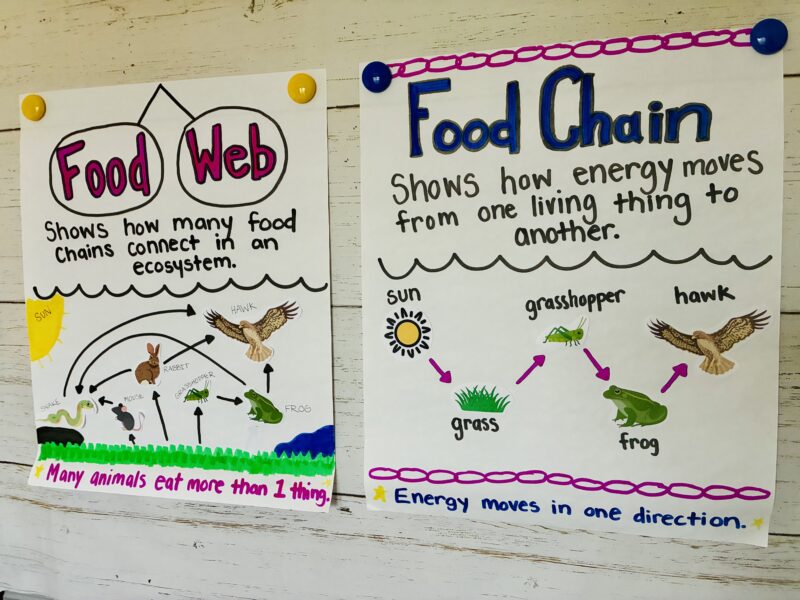
An anchor chart is an amazing tool for supporting instruction. Demonstrate the most important and basic aspects of food webs and food chains as you create an anchor chart for each. Then hang both of them in an easy-to-see area for students to look back at them throughout the unit.
2. Watch videos from BBC Learning Hub
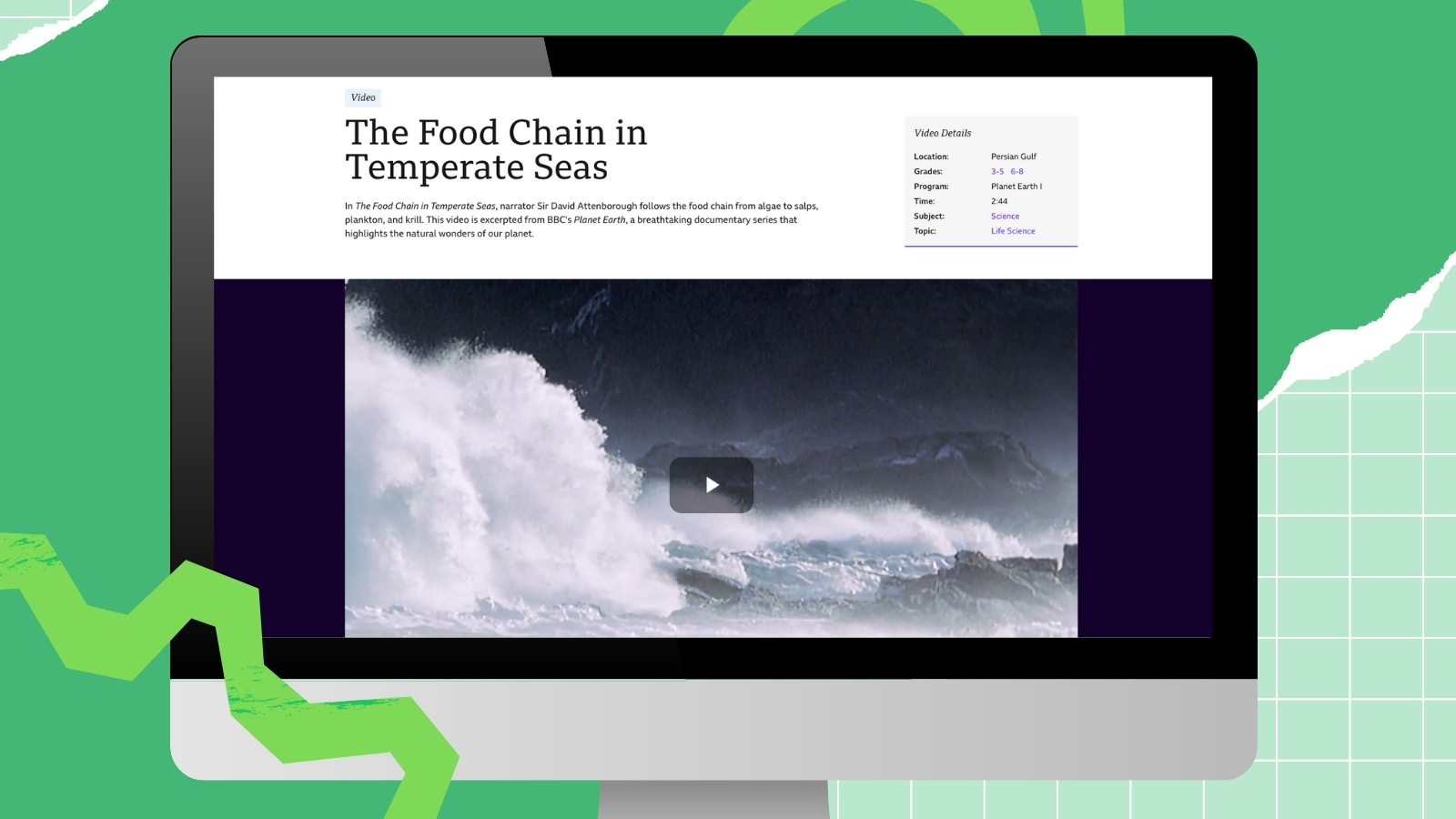
Learning about diverse food webs and food chains is fascinating for kids. Plus, having specific examples in mind helps bring general concepts and vocabulary to life for them. BBC Learning Hub offers free, curated clips from their award-winning nature series to highlight key species in food webs. Watch and discuss just one video, or set students up with an entire playlist.
3. Introduce food webs and food chains by reading aloud
Picture books provide a fun and easy way to introduce topics and springboard big discussions. Here are some of our favorite titles to help students learn more about food chains and food webs:
4. Use a paper plate to show the circle of life
A paper plate provides the perfect base to illustrate food chains! Cut a hole in the center of each plate to emphasize the circular concept of life. Next, have students find (or draw) a picture of each of the five basic elements of a food chain: producer, primary consumer, secondary consumer, tertiary consumer, and decomposer. Then assemble them into food chains around the plate.
5. Put together a food chain puzzle
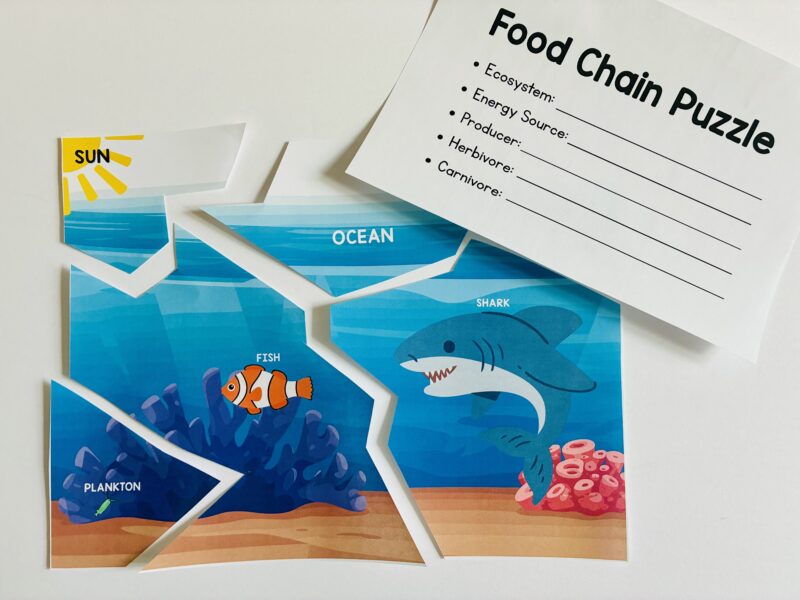
Students can build simple puzzles for a fun way to learn a variety of food chains. Make your own puzzle sets with five pieces per ecosystem for students to put together. Print a photograph and label each puzzle piece. For example, an ocean-themed food chain puzzle can involve the following five pieces: ocean, sun, plankton, fish, and shark. Other ecosystems to explore include the rainforest, the Arctic, deserts, and so on. Give older kids a blank template to make their own puzzles to play (and try to stump) their classmates!
6. Create food chain art
This food web activity is a science project and an art project combined! Students choose a food chain to illustrate, then represent each part of it inside the mouth of the creature eating it. Using construction paper, draw and cut out faces of three different animals and one plant in the chosen food chain. Cut a giant open mouth into the faces of each shape with teeth on the top and bottom. Each animal should be made smaller than the one consuming it. Using a large piece of blank construction paper as the base, glue each animal inside the mouth of the one larger than it to show who eats whom. The mouth of the first in the chain should have the producer inside of it. Super cool!
7. Construct food chain pyramids
A pyramid can be a helpful way to look at how available energy decreases as you move further up the food chain. Print a pyramid template onto card stock for each student. Have them draw a picture of the following on each level, from bottom to top: producer, primary consumer, secondary consumer, and tertiary consumer. Label each one on the corresponding line on another side. Cut it out and fold it into a 3D shape. The same thing can be done by drawing a large triangle on a piece of construction paper, drawing four lines across it, and filling in each space accordingly. Kids will have fun either way you choose!
8. Make food chain nesting dolls
Cut out five strips of paper of different sizes length- and width-wise. Have students draw the producer on the smallest strip, the tertiary consumer on the largest strip, and other animals in the chain on the strips in between. Glue each end of the strips together, making them into circular shapes as if you were making them into rings or tubes. Place them inside each other to make super-cute food chain nesting dolls. For example, if using an ocean theme, the five nesting dolls in order from smallest to largest could be as follows: algae, plankton, seahorse, octopus, and shark. Have everyone do the same five elements, or allow them to illustrate the ecosystem of their choice. The possibilities are endless!
9. Assemble food chain links
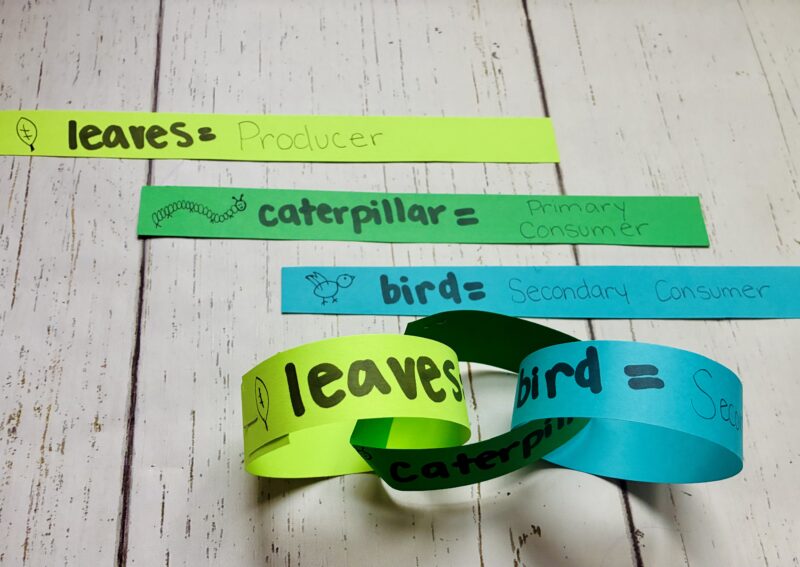
This basic interpretation of a food chain is one that kids can easily make on their own. Give students three strips of construction paper. Have them draw one producer, one primary consumer, and one secondary consumer on each of the strips. Then connect them into a paper chain link in the proper order. Older students can add more chains to the links for longer food chains.
10. Show food web connections with rubber bands
It’s a DIY food web geoboard! Attach pictures of different animals onto a bulletin board with a thumbtack. Then, use the rubber bands on the “thumbtack pegs” to demonstrate how different species within a food web are connected. Use this in a classroom science station, or complete the activity together as a whole class.
11. Display a food web with model animals
Gather up all those toy animals and put them to good use! Glue or tape the figures onto a piece of flat poster board. Connect different colors of thread or yarn to each to represent predators, prey, scavengers, and more. Then, create a web to demonstrate the connections. Those cute animal erasers, resin figurines, or mini 3D animals all will work too! At first glance, this looks like an activity for little kids, but we promise—older students love this too!
12. Turn the food web into a marble maze
We love how this activity turns a biology lesson into a STEM challenge. Students will create a marble run featuring the different levels of the food web. A shoebox provides the base. Make the maze on construction paper, including at least one producer and one example of each of the three types of consumers. Glue the maze into the box, then glue Popsicle sticks inside on the long edges to create the track for the marble to flow through the maze. Kids will get a kick out of playing with their food web marble mazes, so the learning never stops.
13. Stack food chain cups
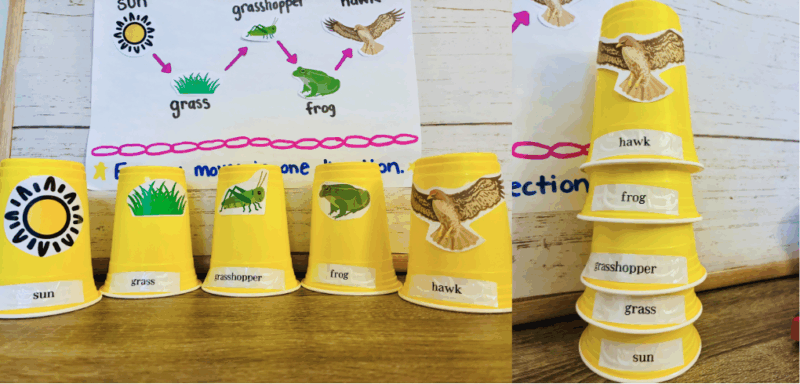
Place five Styrofoam cups upside down. Draw pictures on the upper portions of the cups with the label underneath. The label should be placed near the mouth of the cup so they will stick out when stacked. Stack them in order to show how they all fit together. Challenge kids to see who can stack their cups correctly in the fastest time! Tip: If you don’t have Styrofoam cups, you can use other disposable cups and add a crumpled-up piece of scrap paper between cups in order to see the label.
14. Walk a life-size food web
Lay out cards on letter-sized paper showing all the organisms in a food web. Provide students with large arrows cut from construction paper. Then, have them work together to place arrows in between the cards to show the correct flow of energy. Finally, students can walk along the web by following the arrows to really understand how it all interacts.
15. Play food chain bingo
Create your own game boards using producers, consumers, decomposers, carnivores, and herbivores. Bingo!
16. Create an edible food web
Turn edible food chains into food webs using easy snacks to stand in for various plant and animal life. Get creative with gummies, fruit snacks, animal crackers, dried fruit, and more. There are plenty of yummy variations you can come up with. Nothing gets kids’ attention more than fun with food!
17. Play food chain charades
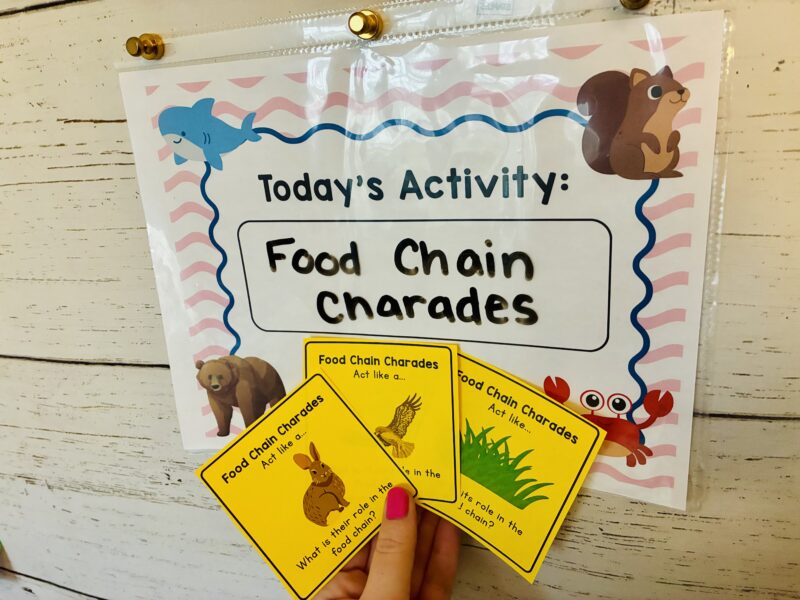
Students will act out different producers, consumers, and decomposers. The class will identify what is being acted out while also identifying where it is in the food chain.
18. Create a classroom-size web with yarn
Assign each student a plant or animal by giving them a picture card. Add in a card with the sun, and have the student with the sun go first. He or she will be given a ball of yarn and will pass it to a producer that uses its energy first. Have students connect their string to whomever they eat and so on and so forth to create a giant (literal) web.
19. Display a food web bulletin board
Bulletin boards are a great resource for reinforcing information in a classroom since they are on display all day. Co-create one with your students by having them create the plant and animal cards. Label the different parts of the board and make arrows interconnecting it all.
20. Make food chain dioramas
Have students choose an ecosystem and build it inside a shoebox. They should label producers, consumers, and decomposers. They can use arrows or string to show the transfer between organisms.
21. Create an edible food chain
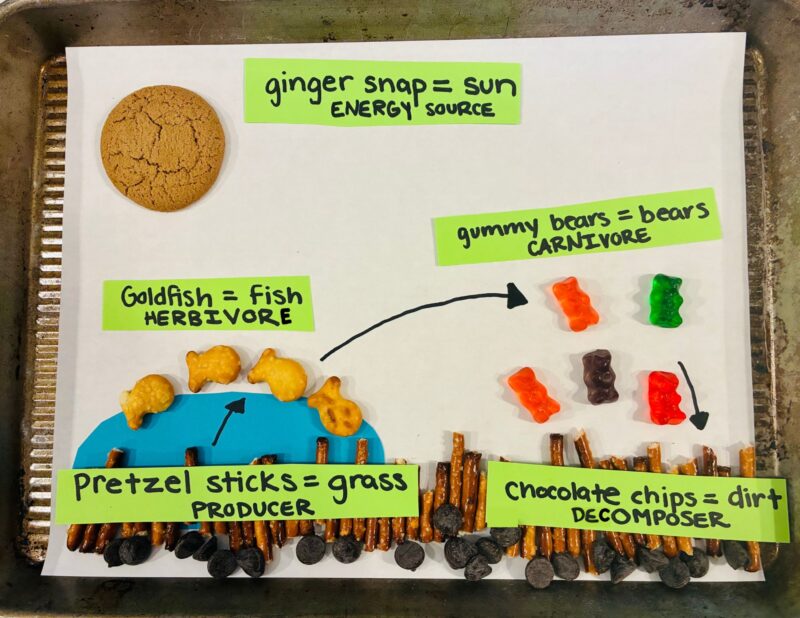
There are few things kids love more than snacks. Create scrumptious five-part food chains with things kids love to eat. You can use a yellow potato chip for the sun, pretzel sticks for grass, a bunny cracker or goldfish cracker for an herbivore, a teddy graham for the carnivore, and chocolate cookie crumbs for the decomposer to represent dirt. You’re definitely going to want to have extra goodies on hand since kids will want to taste it all!
22. Energy flow skits
Calling all actors and actresses! Within small groups, assign students different roles to act out how energy moves from one food web to the next. Give each group a different ecosystem to spice things up. Add to the fun by making up silly songs and dances and watch the creativity flow!
23. Build food chain mobiles
Here is another fun and creative way to show the transfer of energy within a biome. Start with a large cutout of a sun up top. Next, use yarn to show movement down the food chain for each component. For advanced and older students, involve multiple producers, consumers, and decomposers, creating a “food chain chain.” The possibilities are endless!
24. Explore winter food chains
Winter is a unique time for predators and prey within a cold and frozen ecosystem. Brainstorm what happens with organisms in winter. Then create webs on poster board or construction paper with students to launch discussions about how energy transfer adjusts in different seasons.
25. Fill some pockets
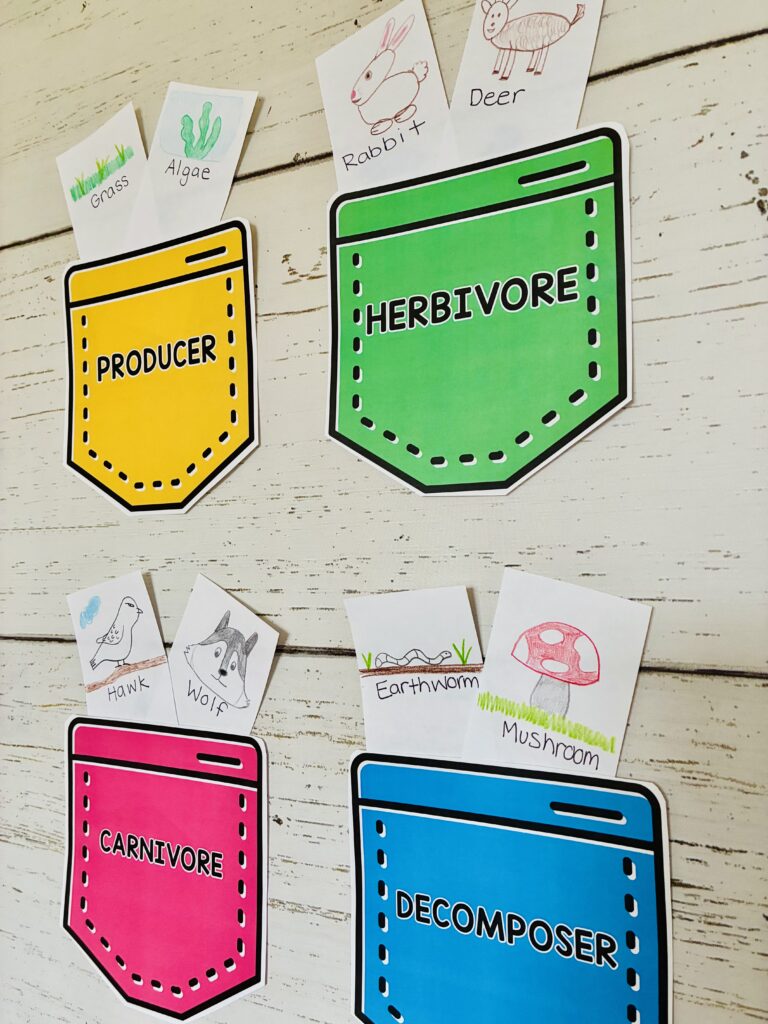
Give students four pocket templates labeled as follows: Producer, Herbivore, Carnivore, and Decomposer. Have students glue them on a large sheet of construction paper, being careful to only put glue on the edges of the top half of the pocket sides and no glue on the top, creating little open pockets. Then give students 12 strips of paper to draw plants, animals, insects, etc., onto the strips to correspond with the pockets.
26. Watch relevant movies
While the days of showing movies every Friday afternoon are over, there are still times to sneak one in. The Lion King, of course, is one of the best examples of how food chains work. After all, the theme song is literally called (and all about the) circle of life! Finding Nemo, Finding Dory, and Moana are excellent depictions of ocean ecosystems. In Ice Age, we see how animals adapt when ecosystems shift due to climate change. A Bug’s Life helps kids understand more about the grasslands. Pop some popcorn and get cozy as kids watch their favorite movies from a new perspective!
27. Read nonfiction texts about food webs
Hone students’ informational text-reading skills and boost their understanding of concepts and vocabulary words with nonfiction texts about food chains and food webs from your favorite resources.
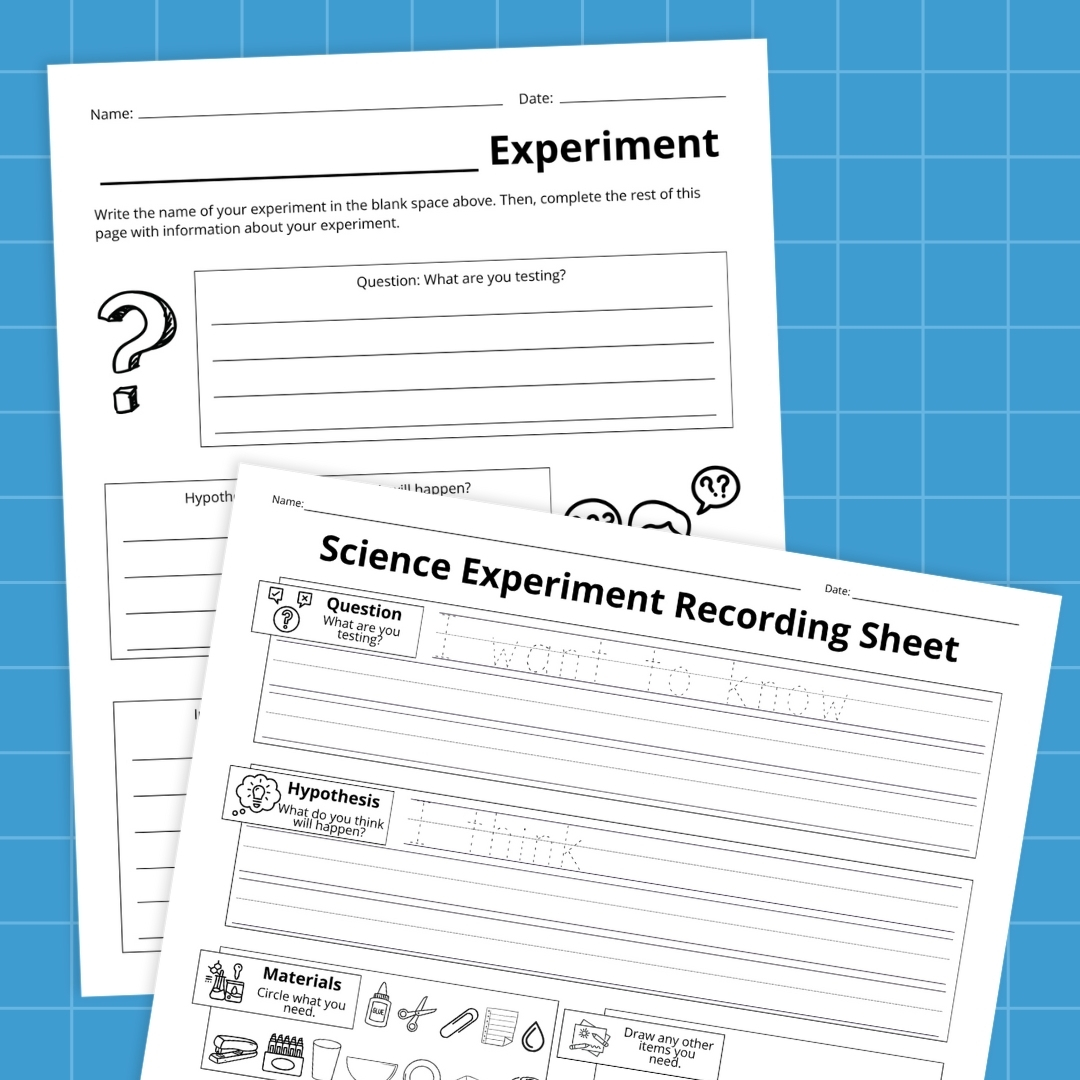
Grab your free science experiment recording sheet!
Get your free printable today! Just click the button, then fill out the form on this page with your email address. Your download will be available right away!
